
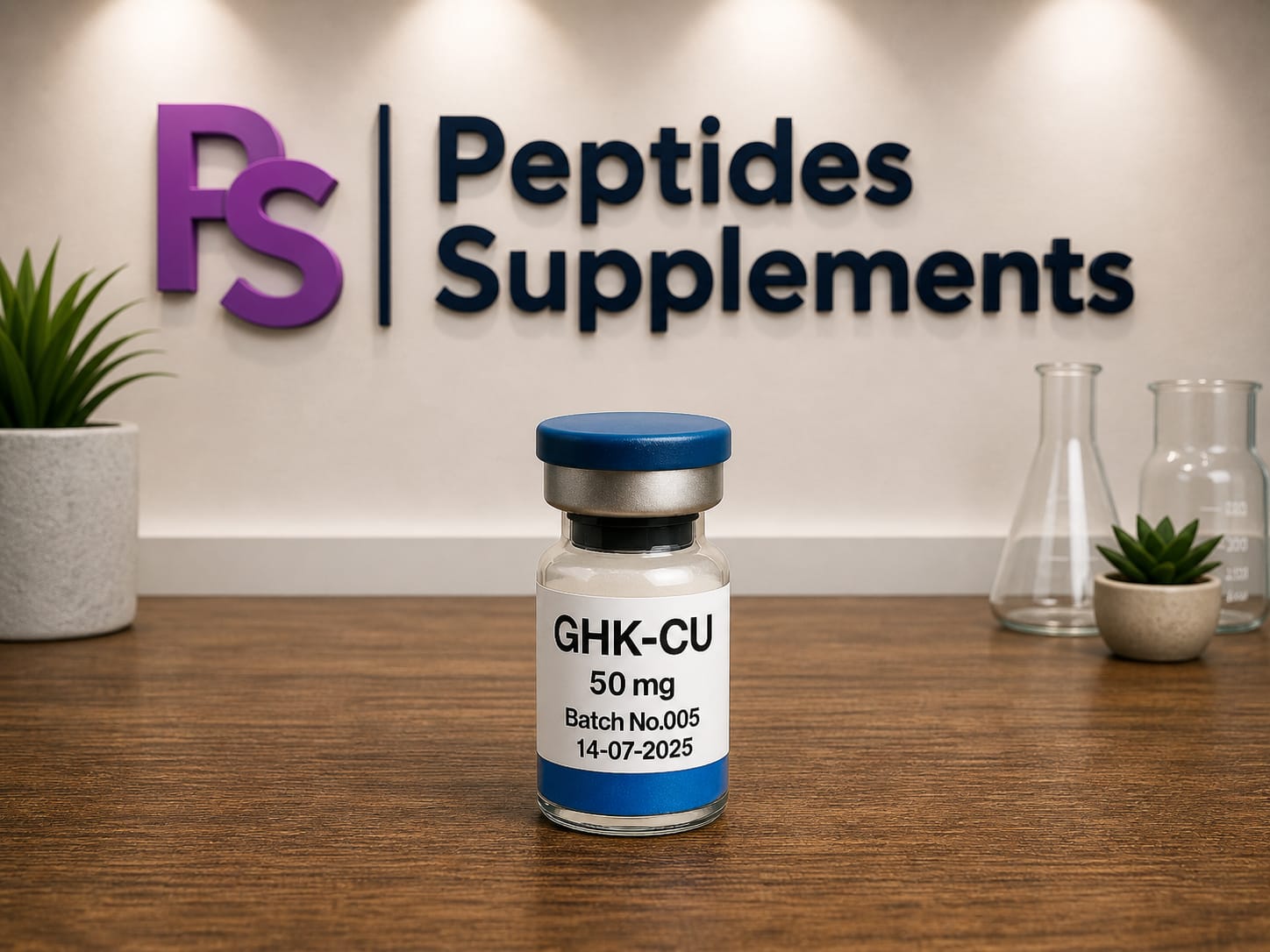
GHK-Cu 50mg – Copper Peptide for Advanced Research
GHK-Cu 50mg Copper Peptides is a premium copper-binding peptide widely studied for its potential role in skin regeneration, collagen production, tissue repair, and cellular renewal. Naturally occurring in the human body, GHK-Cu (Copper Tripeptide-1) has become one of the most recognized peptides in anti-aging and regenerative research due to its involvement in wound healing and skin-support pathways.
Potential Research Benefits
- Studied for collagen and elastin production
- Research involving skin rejuvenation and anti-aging pathways
- May support tissue repair and cellular regeneration
- Investigated for hair and scalp research applications
- Explored for antioxidant and inflammation-related studies
- Interest in wound healing and connective tissue support
Why Researchers Choose GHK-Cu
GHK-Cu is highly researched for its regenerative properties and its ability to influence genes involved in repair and renewal processes. It is commonly studied in cosmetic, dermatological, and longevity-focused research for its potential role in maintaining healthy skin and connective tissue function.
Product Specifications
- Compound: GHK-Cu (Copper Tripeptide-1)
- Strength: 50mg
- Purity: High-purity research grade
- Form: Lyophilized powder
- Category: Copper peptide
- Application: Laboratory and research use only
Key Characteristics of GHK-Cu (50mg)
- Copper-Binding Research Complex: A GHK tripeptide chelated with Cu(II), used to study copper-dependent biology.
- ECM and Collagen-Focused Models: Frequently used in fibroblast systems that track collagen and matrix-related markers.
- Redox and Oxidative-Stress Research: Supports studies of antioxidant pathways and stress-response signaling under controlled conditions.
- Wound and Tissue-Response Models (preclinical): Used in experimental settings that measure connective tissue and repair-related endpoints.
- Gene-Expression Readouts: Research reports changes in gene sets linked to remodeling, inflammation signaling, and oxidative defense.
- Dermal Model Utility: Used in skin-related research that evaluates matrix organization and tissue structure markers.
- High-Purity, Lyophilized Format: Designed for reproducible preparation and traceability across experiments.
How GHK-Cu (50mg) Copper Peptides Supports Research
Researchers use GHK-Cu (50 mg) to explore how copper availability and delivery can influence tissue remodeling and cellular signaling. In experimental systems, the complex provides a controlled way to study copper-linked changes in collagen-associated pathways, inflammatory mediators, and oxidative stress markers.
Because studies have evaluated GHK-Cu across multiple cell types (including fibroblasts and keratinocytes) and in preclinical models, it is commonly used to support mechanistic work on aging-related tissue changes, repair biology, and copper homeostasis—strictly within controlled research designs.
Research Applications & Usage Information
GHK‑Cu (50 mg) is commonly used in:
- Fibroblast function: Examining collagen synthesis and extracellular-matrix changes in cell cultures.
- Wound healing: Studying connective tissue deposition, angiogenesis, and inflammatory markers in animal models.
- Cosmetic research: Exploring dermal tissue effects, skin elasticity, and wrinkle reduction in controlled studies.
- Oxidative stress: Investigating how GHK‑Cu influences antioxidant enzyme activity and stress responses in cells.
- Copper transport: Studying copper uptake and homeostasis in cell models.
- Neuroprotection: Researching the peptide’s effects on neuronal cells and gene expression linked to neuroprotection.
- Cancer research: Evaluating GHK‑Cu in tumor biology and its impact on cancer cell behavior.
Notably, GHK‑Cu 50mg Copper Peptides is a tool for exploring copper-dependent signaling and tissue regulation, with effects observed only in specific research models.
Handling and Storage Recommendations
- Keep lyophilized vials sealed at −20°C or colder, dry, and protected from light.
- Let the vial warm to room temperature while sealed to reduce condensation.
- Store at 2-8°C (short-term) or −20°C (long-term) based on your lab’s validated practice.
- Use standard PPE (lab coat, gloves, eye protection).
- Dispose of unused peptide, solutions, and contaminated items according to institutional and local chemical/biological waste procedures.
Research Use Only Notice


2 reviews for GHK-CU 50mg Copper Peptides
There are no reviews yet.